
One of the most common concerns after aesthetic surgery is swelling. After procedures such as liposuction, tummy tuck, body contouring, breast surgery or certain facial surgeries, patients may experience swelling, tightness, tenderness, heaviness or firmness in the treated areas. In many cases, this is a normal part of the healing process. However, patients often ask: “How can swelling be managed more comfortably?”, “Do I need lymphatic massage?”, “Can massage help my body shape after liposuction or tummy tuck?”
Postoperative lymphatic massage may be considered a supportive care method when it is performed at the right time, with the right technique and with the surgeon’s approval. The most important point is that lymphatic massage is not a replacement for surgery, and it does not guarantee a specific result. It is a supportive step that may help with swelling management, tissue comfort and the patient’s overall recovery experience.
Especially after liposuction and tummy tuck surgery, swelling management can be an important part of the recovery plan. However, when lymphatic massage should begin, who should perform it, which areas should be treated, how much pressure should be used and when massage should be avoided must be determined by the surgeon.
A massage performed too early, too aggressively or by someone who does not understand postoperative tissue healing may cause discomfort, bruising, tissue irritation, pressure on incision lines or delayed recovery concerns. Therefore, lymphatic massage after surgery should not be seen as a regular spa massage. It should be performed gently, carefully and in line with the surgical recovery plan.
In this article, we will explain what lymphatic massage is, how it may support swelling management, why it is often discussed after liposuction and tummy tuck surgery, when it may be started, and what patients should consider. This content is prepared in line with the expertise of Dr. Ahmet Kaplan, a Plastic, Reconstructive and Aesthetic Surgeon in Istanbul, Turkey.
What Is the Lymphatic System?
The lymphatic system is an important part of the body’s fluid balance and immune defense. Unlike the blood circulation system, the lymphatic system helps collect and transport excess fluid, proteins, cellular waste and certain immune cells from the tissues.
The body contains lymphatic vessels along with blood vessels. These lymphatic vessels help move excess fluid from the tissues toward lymph nodes. Lymph nodes act as filters and are part of the immune system.
After surgery, temporary fluid accumulation can occur in the treated tissues. This is commonly felt as swelling or edema. Patients may notice tightness, firmness, heaviness or sensitivity in the surgical area. Over time, the lymphatic system plays a role in helping the body process and remove this excess fluid.
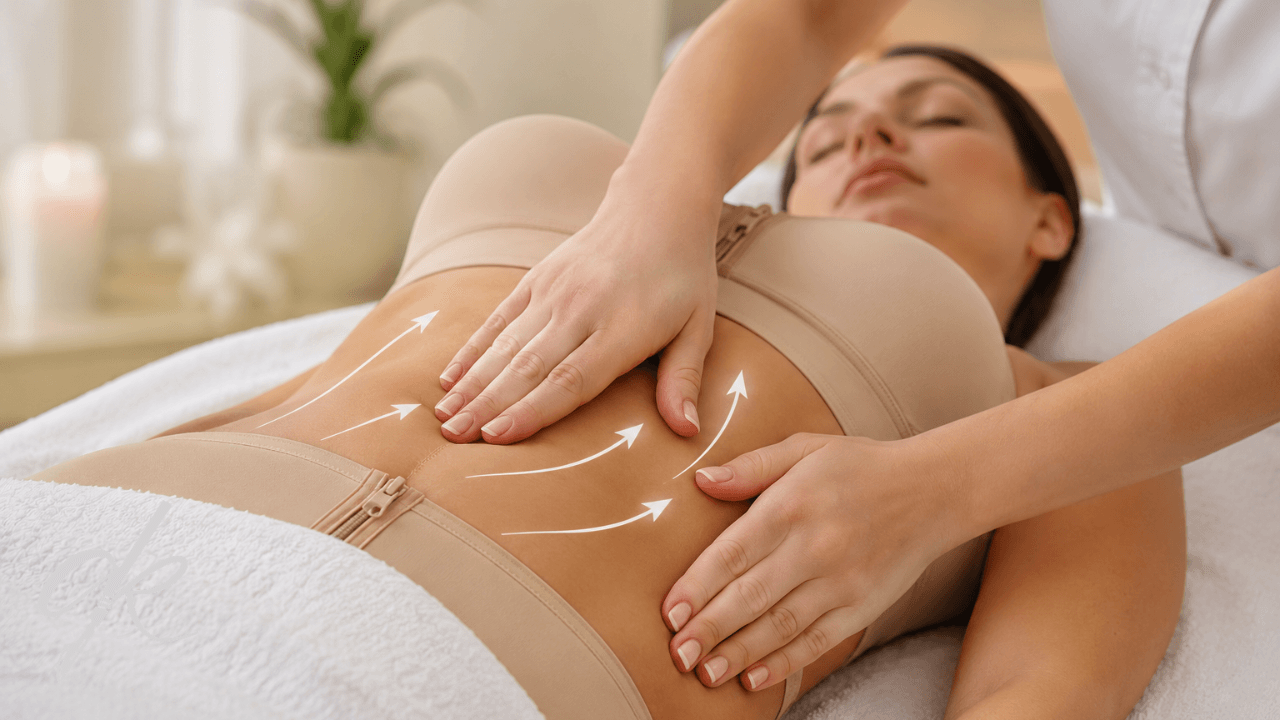
The basic idea of lymphatic massage is to gently support this natural system. However, this support does not mean deep pressure, forceful massage or aggressive manipulation. Lymphatic massage is typically light, rhythmic, slow and directed toward natural drainage pathways.
Why Does Swelling Occur After Surgery?
Postoperative swelling is part of the body’s natural healing response to surgery. During surgery, tissues are handled, small blood and lymphatic vessels may be affected, and the fluid balance in the treated area may temporarily change. As part of healing, the body sends fluid and repair cells to the area.
This can be more noticeable after procedures such as liposuction, where the subcutaneous fat layer is treated over a broad area. After tummy tuck surgery, swelling may occur because the abdominal tissues are repositioned, excess skin may be removed, and the abdominal region undergoes significant healing.
Swelling is not the same in every patient. Tissue quality, age, general health, the number of areas treated, the extent of surgery, salt intake, movement level, compression garment use and adherence to postoperative instructions can all influence swelling.
The presence of swelling does not automatically mean that healing is poor. However, managing swelling properly may help patients feel more comfortable and understand their recovery process more clearly.
What Is Lymphatic Massage?
Lymphatic massage, also known as lymphatic drainage massage, is a gentle technique designed to support lymphatic circulation. Its purpose is to assist the movement of excess fluid in the tissues toward lymphatic pathways and support the body’s natural fluid balance.
This massage is different from classic massage. Traditional massage may involve muscle relaxation, deeper pressure or kneading movements. Lymphatic massage uses much lighter pressure. Movements are slow, rhythmic and applied in specific directions.
After aesthetic surgery, lymphatic massage may be used as a supportive care method during recovery. However, it is not necessary for every patient, and it is not suitable at every stage of healing.
This is why the timing and technique should be determined according to the surgeon’s assessment. Incision lines, stitches, bruises, sensitive areas and the amount of swelling must all be considered.
What Does Lymphatic Massage Do After Surgery?
The most commonly discussed benefit of lymphatic massage after surgery is its possible support in swelling management. It may help the body manage fluid accumulation in the tissues more comfortably.
Some patients may feel lighter, less tight or more comfortable after properly performed lymphatic massage. After liposuction, some areas may feel firm, uneven or swollen during the early recovery period. With a careful postoperative plan, these changes can be monitored more comfortably.
However, lymphatic massage should not be expected to create a “miracle” result. Massage alone does not determine the final outcome of surgery. Surgical planning, tissue quality, compression garment use, nutrition, movement, genetics and the body’s healing response all influence the final appearance.
Lymphatic massage can be one supportive part of this process. The right patient, correct timing and experienced application are essential.
Does Lymphatic Massage Help Reduce Swelling Faster?
Lymphatic massage may help some patients manage swelling more comfortably. However, it is not accurate to say that it definitely speeds up swelling reduction in every patient. Swelling does not depend on massage alone.
Postoperative swelling is influenced by the body’s healing speed, the size of the surgical area, circulation, daily movement, fluid intake, nutrition and compliance with medical instructions.
Lymphatic massage may support lymphatic flow through light, guided and tissue-friendly movements. It may help fluid distribution feel more balanced in some patients.
However, it should never be performed with the idea of “pressing the swelling out” or “breaking down edema” through strong pressure. Postoperative tissues are sensitive. The goal is not aggressive manipulation; the goal is gentle support.
Why Is Lymphatic Massage Often Discussed After Liposuction?
Lymphatic massage is often discussed after liposuction because liposuction involves treatment of the fat layer beneath the skin. After liposuction, swelling, bruising, tenderness, firmness and irregular swelling sensations may occur in the treated areas.
The body needs time to adapt to the new contour. The appearance during the first weeks does not represent the final result. As swelling decreases, the treated areas become easier to evaluate.
Lymphatic massage may support swelling management after liposuction in some patients. It may also help reduce the feeling of tightness and improve comfort during the recovery period.
However, massage should not be seen as the only factor that shapes the body after liposuction. The final body contour depends on surgical technique, the areas treated, skin elasticity, swelling resolution, compression garment use and individual healing response.
Why May Lymphatic Massage Be Important After Tummy Tuck Surgery?
After tummy tuck surgery, swelling, tightness and tenderness may occur in the abdominal area. This procedure may involve removal of excess skin, repositioning of tissues and, in suitable patients, evaluation of the abdominal wall. Because of this, recovery after tummy tuck has its own specific considerations.
Lymphatic massage after tummy tuck should only be considered when the surgeon approves it. The incision line, stitches and healing abdominal tissues require careful protection. Applying pressure too early or too strongly is not appropriate.
When performed at the right stage and with the correct technique, gentle lymphatic massage may help support swelling management and comfort. However, massage after tummy tuck should never place pressure on the incision line, strain the stitches or aggressively manipulate abdominal tissues.
The massage plan after tummy tuck must be personalized. Every patient’s healing speed, swelling level, incision condition and tissue sensitivity are different.
Can Lymphatic Massage Help the Body Shape After Surgery?
The role of lymphatic massage in body shaping is generally related to swelling management and tissue comfort. Massage does not shape the body by itself.
After liposuction or tummy tuck surgery, it takes time for the body contour to become clearer. In the early period, swelling can make treated areas look larger, firmer or uneven. As swelling decreases, the effect of surgical planning becomes more visible.
Lymphatic massage may help some patients experience this transition more comfortably. It may reduce tightness, swelling sensation and movement discomfort.
However, it is not accurate to think, “If I get massage, my result will definitely be better,” or “If I do not get massage, my surgery will fail.” Some patients may be advised to have lymphatic massage, while others may not need it. The decision should be based on the surgeon’s evaluation.
When Should Lymphatic Massage Start After Surgery?
The timing of lymphatic massage after surgery depends on the procedure and the patient’s healing progress. There is no single fixed day that applies to everyone.
After some procedures, very gentle drainage techniques may be considered earlier. After other surgeries, it may be necessary to wait longer for tissues to heal. This is especially important after tummy tuck surgery, where incision lines and abdominal tissue tension must be respected.
Before massage begins, the surgeon considers wound healing, pain level, bruising, tenderness, drains if present, signs of infection and the patient’s follow-up examination.
Patients should not decide on their own to start massage immediately after surgery. The safest approach is to ask the surgeon: when to begin, which areas can be treated, how much pressure is acceptable and who should perform the massage.
Who Should Perform Lymphatic Massage After Surgery?
Postoperative lymphatic massage should be performed by someone who understands tissue sensitivity after surgery and has experience with lymphatic drainage. This may be a physiotherapist, medical massage therapist or trained practitioner recommended by the surgeon.
A regular spa massage is not the same as postoperative lymphatic massage. After surgery, tissues are delicate and must be treated gently and appropriately.
The person performing the massage should avoid pressure on incision lines, should not force bruised or sensitive areas, should listen to the patient’s pain response and should stay within the limits set by the surgeon.
The patient should also communicate immediately if they feel pain, burning, pulling, excessive pressure or unusual discomfort. Lymphatic massage should be gentle and comfortable. A painful massage is not the right massage.
How Is Lymphatic Massage Performed?
Lymphatic massage is usually performed with light pressure, rhythmic movements and specific directional techniques. The goal is not to press deeply into the tissues, but to support natural lymphatic movement.
During the session, gentle movements are used over the skin. Deep tissue massage, intense kneading, forceful pressure or painful techniques are generally not appropriate during the postoperative period.
The direction and areas of massage may vary depending on the surgery. For example, the approach after abdominal, waist, hip or thigh liposuction may differ. After tummy tuck, the incision line and abdominal tissues require even greater care.
The purpose of lymphatic massage is not to crush swelling, force fluid out or quickly shape the body. The purpose is to support the healing process gently.
Can Patients Perform Lymphatic Massage at Home?
In some cases, patients may be shown very light supportive movements for home care during an appropriate stage of recovery. However, this does not mean everyone should massage themselves after surgery.
In the early period, applying pressure to the wrong area, massaging too close to an incision line or using excessive force can be harmful. If home massage is recommended, the technique must be demonstrated by the surgeon or an experienced professional.
One common mistake is assuming that stronger pressure is more effective. In lymphatic massage, stronger pressure does not mean better results. Excessive force can irritate sensitive healing tissues.
The safest home care approach is to follow the surgeon’s instructions regarding compression garments, walking, hydration, nutrition and wound care. Massage should only be performed if recommended and properly explained.
Is Lymphatic Massage Painful?
Proper lymphatic massage is usually not painful. After surgery, treated areas may be sensitive, so mild tenderness can occur. However, sharp pain, burning, stinging or intolerable pressure should not be considered normal.
Painful massage is not appropriate after surgery. The practitioner should respect the sensitivity of healing tissues. If the patient feels pain, the massage should be stopped or pressure should be reduced.
Some people believe that “the more it hurts, the more effective it is.” This is not a correct approach after aesthetic surgery. The core principle of lymphatic drainage is gentle guidance, not strong pressure.
How Many Lymphatic Massage Sessions Are Needed?
The number of lymphatic massage sessions varies from patient to patient. The type of surgery, amount of swelling, tissue response, healing speed and surgeon’s recommendation all influence the plan.
Some patients may feel more comfortable after a few sessions, while others may need a more structured follow-up. Some patients may not need lymphatic massage at all.
The number of sessions is less important than correct timing and technique. More sessions do not automatically mean better results. As with all postoperative support methods, personalization is important.
Is Lymphatic Massage Necessary After Every Surgery?
No. Lymphatic massage is not required after every surgery. In some procedures, swelling management may be adequately supported through walking, compression garment use, hydration, nutrition and routine follow-up appointments.
In other cases, especially after wider-area liposuction, body contouring procedures or when swelling is more pronounced, lymphatic massage may be recommended as a supportive method.
However, this does not mean everyone must have massage after surgery. The decision should be based on the surgeon’s examination and the patient’s recovery progress.
Patients should not choose massage only because they saw it on social media. The postoperative plan should be individualized.
When Should Lymphatic Massage Be Avoided?
Lymphatic massage may not be suitable in certain situations. It should be avoided if there is a suspected infection, fever, discharge from the incision, intense redness, severe pain, unexpected swelling, bleeding, open wounds or if the surgeon has not yet approved massage.
Patients with clotting disorders, vascular problems, heart failure, active infection or serious systemic diseases should also be evaluated medically before massage is considered.
Before scheduling lymphatic massage, patients should consult the surgeon who performed the operation. What appears to be simple swelling from the outside may sometimes require medical evaluation.
For this reason, the approach should not be: “I have swelling, so I should immediately get a massage.” First, it must be understood whether the swelling is part of normal recovery or whether it needs medical assessment.
How Are Lymphatic Massage and Compression Garments Related?
After procedures such as liposuction and tummy tuck surgery, compression garments may be recommended for some patients. Compression garments may support swelling control, help tissues settle more comfortably and make movement feel safer during the recovery phase.
Lymphatic massage and compression garments are not alternatives to each other. If a compression garment is recommended, massage does not make it unnecessary. Likewise, wearing a compression garment does not always mean massage will never be needed.
In suitable patients, these two support methods may be planned together. However, when to remove the garment, whether it should be worn before or after massage, and how skin care should be managed must be determined individually.
Patients should not stop wearing compression garments on their own or try to replace compression with massage.
What Should Patients Do After Lymphatic Massage?
Some patients may feel lighter and more comfortable after lymphatic massage. However, general postoperative instructions should still be followed. Adequate water intake, balanced nutrition, gentle walking, recommended compression garment use and rest remain important.
If excessive pain, redness, increased tenderness, worsening bruising, incision changes or general discomfort occurs after massage, the surgeon should be informed.
Patients should also avoid immediately returning to intense exercise, sauna, Turkish bath, very hot showers, sunbathing or heavy activity after massage unless approved by the surgeon.
During postoperative recovery, every step should follow the medical recovery plan.
When Are the Effects of Lymphatic Massage Felt?
Some patients may feel temporary relief or lightness after lymphatic massage. However, complete swelling reduction takes time. It is not realistic to expect all swelling to disappear after one or two sessions.
After liposuction, tummy tuck and body contouring procedures, the body contour becomes clearer gradually over weeks and months. The swelling seen in the first days and weeks does not represent the final result.
Lymphatic massage may support this process in suitable patients, but it does not determine the outcome alone. The most accurate assessment is made during regular follow-up appointments with the surgeon.
What Else Helps Manage Swelling After Surgery?
Swelling management is not limited to massage. Adequate water intake, gentle walking, reducing excessive salt, eating enough protein and maintaining good sleep habits can support recovery.
Correct use of compression garments or medical support products recommended by the surgeon may also be important. Smoking, excessive alcohol, intense physical activity and uncontrolled diets may negatively affect healing.
Patients should avoid hot applications, unapproved herbal products, aggressive massage or device-based treatments without medical approval.
Postoperative healing is supported by a complete care plan, not by a single method.
Be Careful with Social Media Massage Videos
In recent years, videos of lymphatic massage after liposuction or tummy tuck surgery have become common on social media. Some of these videos show aggressive techniques, exaggerated claims or unrealistic statements such as “swelling disappears immediately.”
These videos can be misleading. Every surgery, every patient and every recovery process is different. A technique used on one person may not be appropriate for another.
After surgery, applying strong pressure, forcing incision areas or continuing massage despite pain is not correct. Social media content cannot replace medical evaluation.
Patients considering lymphatic massage should make this decision together with their surgeon.
Postoperative Care Planning with Dr. Ahmet Kaplan in Istanbul, Turkey
A healthy aesthetic surgery process does not end when the operation is completed. Postoperative care, swelling management, compression garment use, wound monitoring, nutrition, movement and supportive therapies are all part of the recovery journey.
Dr. Ahmet Kaplan, a Plastic, Reconstructive and Aesthetic Surgeon in Istanbul, Turkey, evaluates the type of surgery, tissue condition, swelling level and healing progress together when planning postoperative care. Whether lymphatic massage is needed, when it can begin and who should perform it should be determined individually.
After liposuction, tummy tuck or body contouring procedures, patients benefit from understanding that swelling is a natural part of healing, while certain supportive methods may help the process feel more comfortable.
The goal is not to give every patient the same massage schedule. The goal is to create a care plan that suits the patient’s surgery and recovery process.
Conclusion: Lymphatic Massage Is a Supportive Care Step, but Correct Timing Is Essential
Lymphatic massage after surgery may be considered a supportive method for swelling management, especially after procedures such as liposuction and tummy tuck. When performed with the right technique, at the right time and with surgeon approval, it may contribute to patient comfort.
However, lymphatic massage does not determine the surgical result by itself. Body contour develops through surgical planning, tissue quality, gradual swelling reduction, compression garment use, lifestyle habits and individual healing response.
Massage performed too early, too aggressively or without proper knowledge may negatively affect recovery. This is why patients should always ask their surgeon before starting postoperative lymphatic massage.
The best approach is to avoid rushing the healing process, attend follow-up appointments and personalize every supportive care step. Conscious postoperative care is one of the most important parts of aesthetic surgery recovery.
Frequently Asked Questions
What is lymphatic massage after surgery?
Lymphatic massage after surgery is a gentle technique designed to support lymphatic circulation and help manage excess fluid in the tissues during recovery.
Does lymphatic massage reduce swelling faster?
It may support swelling management in some patients, but it cannot be said that it definitely speeds up swelling reduction in every case.
Is lymphatic massage necessary after liposuction?
Not always. It may be recommended in some patients after wider-area liposuction or when swelling is more pronounced, depending on the surgeon’s assessment.
Can lymphatic massage be performed after tummy tuck surgery?
Yes, but only when the surgeon approves it. Timing is especially important because the incision line and abdominal tissues need careful protection.
When should lymphatic massage start?
The timing depends on the procedure and healing progress. Patients should not start massage without surgeon approval.
Is lymphatic massage painful?
Proper lymphatic massage should not be painful. Mild tenderness may occur after surgery, but sharp pain, burning or strong pressure is not appropriate.
Who should perform lymphatic massage after surgery?
It should be performed by a trained professional who understands postoperative tissue sensitivity and is experienced in lymphatic drainage.
Can I do lymphatic massage at home?
Only if the surgeon or a qualified professional has shown the correct technique and approved home care. Early or aggressive self-massage is not recommended.
Does lymphatic massage shape the body?
Massage does not shape the body by itself. It may support swelling management and tissue comfort while the body contour becomes clearer over time.
How many sessions are needed?
The number of sessions varies. It depends on the surgery, swelling level, healing speed and surgeon’s recommendation.
Is compression garment use enough instead of massage?
Compression garments and lymphatic massage are not the same. If a garment is recommended, it should be used as instructed. The need for massage is assessed separately.
Is strong massage more effective after surgery?
No. Strong massage is not appropriate after surgery. Lymphatic drainage should be gentle, controlled and tissue-friendly.
Does lymphatic massage remove bruises?
Bruises fade naturally over time. Lymphatic massage may support circulation in some patients, but it does not remove bruising immediately.
When should lymphatic massage be avoided?
It should be avoided if there is infection, fever, discharge, severe pain, open wounds, unexpected swelling or if the surgeon has not approved it.
What should I do after lymphatic massage?
Continue following postoperative instructions, drink enough water, rest, walk gently if approved, use compression garments as advised and inform the surgeon if unusual symptoms occur.
Instagram Caption:
Swelling after surgery can be a natural part of recovery, especially after procedures such as liposuction, tummy tuck and body contouring.
Lymphatic massage may support swelling management when performed at the right time, with the correct technique and with the surgeon’s approval. The goal is not to apply strong pressure, but to gently support lymphatic circulation.
This should not be considered a regular spa massage. Since postoperative tissues are sensitive, it should be performed by experienced professionals who understand surgical recovery.
Lymphatic massage does not shape the body by itself. However, in suitable patients, it may help swelling feel more manageable and support a more comfortable recovery process. Timing and the number of sessions should be personalized.
For patients considering postoperative care in Istanbul, Turkey, the massage plan should always be coordinated with the surgeon’s recovery recommendations.
ℹ️ Results may vary from person to person in every surgical or interventional procedure. It is recommended to consult your physician for detailed information before the procedure.