
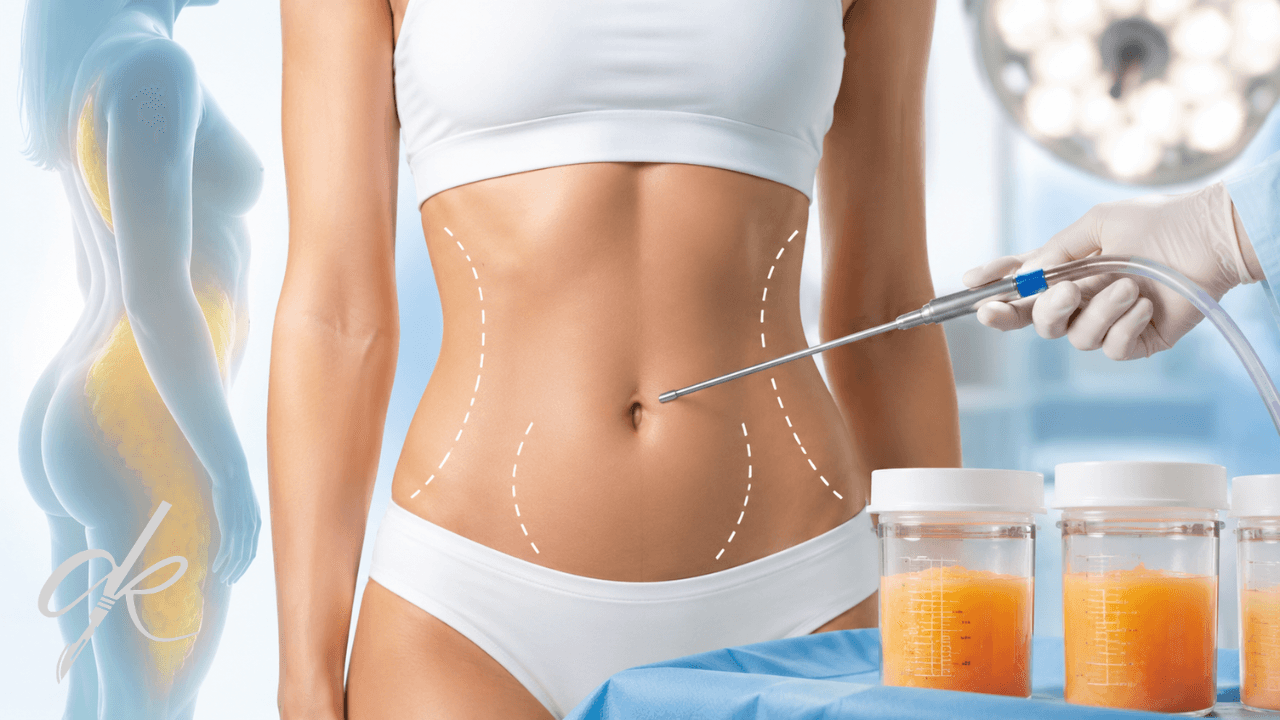
When people hear the word liposuction, many immediately think of “losing weight by removing fat.” Especially for those who are concerned about stubborn fat around the abdomen, waist, hips, thighs, arms, or under the chin, liposuction may seem like a procedure that could lead to a significant change on the scales.
However, the main purpose of liposuction is not weight loss. Liposuction is a surgical procedure designed to reduce localized fat deposits and support body contouring in suitable patients. In other words, it is more closely related to body shape and proportion than to the number shown on a scale.
Consider someone whose weight is relatively stable, who pays attention to nutrition and exercise, yet still has a disproportionate accumulation of fat in the lower abdomen, waistline, hips, inner thighs, arms, or under the chin. In suitable cases, liposuction may be considered for these localized areas.
However, the idea that “I have excess weight, so liposuction will remove it all” is not medically realistic. Liposuction is not a treatment for obesity. It does not replace healthy nutrition, physical activity, medical weight management, or sustainable lifestyle changes.
In addition, not every area of fullness is caused only by excess fat. Loose skin, weakened abdominal muscles, separation of the abdominal muscles after pregnancy, swelling, or deeper fat around the internal organs can also affect body appearance.
So, who may be suitable for liposuction? What expectations are realistic? Can liposuction tighten loose skin? Does fat return after surgery? In this article, we will explain the role of liposuction in body contouring in a clear, realistic, and patient-focused way, in line with the expertise of Dr. Ahmet Kaplan, a Plastic, Reconstructive and Aesthetic Surgeon in Istanbul, Turkey.
What Is Liposuction?
Liposuction is a surgical procedure in which localized fat tissue beneath the skin is reduced through thin cannulas. Although it is commonly known as “fat removal,” medically it is better understood as a body contouring procedure rather than a general weight loss operation.
Areas that may be evaluated for liposuction include the abdomen, waist, back, hips, thighs, inner knees, upper arms, male chest area, and the region under the chin. The areas to be treated and the extent of the procedure depend on the patient’s anatomy, general health condition, tissue quality, and surgical evaluation.
During liposuction, the aim is not to force every body into the same shape. Every person has a different bone structure, muscle distribution, skin elasticity, and body proportion. For this reason, proper planning focuses on achieving a balanced contour that is suitable for the individual’s natural body structure.
Liposuction should therefore be seen as a procedure that may improve certain localized contours in selected patients, rather than a shortcut for changing overall body weight.
Is Liposuction a Weight Loss Method?
No. Liposuction is not a weight loss method.
Weight loss refers to reducing overall body weight and body fat through nutrition, exercise, lifestyle habits and, when necessary, medical support. Liposuction is different: it is a surgical procedure directed at specific deposits of fat located beneath the skin.
When a person needs to lose weight, the goal is not only to reduce fullness in the abdomen or hips. Overall metabolic health, internal fat accumulation, blood sugar balance, cardiovascular health, movement capacity, and long-term weight control are also important. Liposuction does not replace any of these factors.
For example, a person who needs to lose a significant amount of weight should not expect liposuction alone to provide a safe and appropriate solution. The amount of fat that may be removed during surgery is determined within the limits of patient safety, anatomy, health status, and surgical planning.
In summary, liposuction is not intended to make a person lose weight. It may be considered in suitable patients whose weight is reasonably stable and who are concerned about localized fat deposits affecting their body contour.
Is Losing Weight on the Scale the Same as Improving Body Contour?
No, these are not the same thing. Weight loss on the scale means that the body has reduced its overall mass. Body contour, on the other hand, refers to the visual transitions and proportions of the body, such as the waistline, abdominal profile, hip transition, upper arm outline, or jaw and neck contour.
A person may lose a few kilograms and notice a difference on the scale, yet still have genetically resistant fat deposits in the hips or lower abdomen. Another person may lose weight from the face and upper body but continue to notice fullness around the waist.
This is the point at which liposuction may be evaluated: not for a general weight problem, but for localized fat deposits that continue to affect body proportions despite stable lifestyle habits.
Therefore, during a consultation, the most helpful question is not only, “How much weight will I lose?” It is also important to ask: “Is the area that concerns me truly caused by subcutaneous fat?”, “Can my skin adapt to a change in volume?” and “Are my expectations suitable for my body structure?”
Which Areas Can Be Evaluated for Liposuction?
Liposuction may be considered in various body areas where localized fat deposits are present and the anatomy is suitable for surgical contouring. One of the most commonly evaluated areas is the abdomen and waistline. Fat deposits around the waist may affect body proportions even when a person’s overall weight is relatively balanced.
The hips, outer thighs and inner thighs may also remain fuller in some people due to genetic body structure. Even with regular exercise and stable weight, disproportionate fat accumulation can sometimes remain in these areas.
Localized fat around the upper arms, back area, or bra line may also be assessed in selected patients. Likewise, fullness beneath the chin may affect the transition between the face and neck, even in people who are not generally overweight.
However, not every area of thickness is suitable for liposuction. If loose skin is the main concern, if muscle structure is affecting the appearance, or if abdominal fullness is related to deeper internal fat, liposuction alone may not meet the person’s expectations.
Who Is an Ideal Candidate for Liposuction?
A suitable candidate for liposuction is often someone whose overall weight is close to their personal target and has remained relatively stable. This person may still have localized fat deposits that do not respond as expected to lifestyle habits.
Skin quality is also important. After fat tissue is reduced, the skin should have enough elasticity to adapt reasonably to the new contour. If the skin is significantly loose or sagging, removing fat alone may not provide the desired appearance.
A suitable patient should also be in a general health condition compatible with surgery. Smoking, chronic medical conditions, clotting problems, medications and previous operations must all be considered during planning.
Another essential issue is expectation. It is not realistic to expect liposuction to provide substantial weight loss, a completely flawless body, total removal of cellulite, or full correction of loose skin. A suitable candidate is someone who understands both the possible benefits and the limitations of the procedure.
Can Everyone with Excess Weight Have Liposuction?
Having excess weight does not automatically mean that a person is suitable for liposuction. In patients with significant general weight concerns, the initial evaluation often focuses on weight management and overall health rather than surgical contouring.
This is because liposuction is not intended to significantly reduce total body weight. Even if fat is reduced from the abdomen, waist or hips, the person’s broader weight-related concerns may remain.
Higher body weight may also influence surgical risks and the recovery period. Therefore, body weight, body mass index, health status, distribution of fat and expectations should all be evaluated together.
In some cases, patients may first be advised to reach a healthier and more sustainable weight. Once their weight has remained stable for a period of time, body contouring procedures may be assessed more appropriately.
This approach may be important not only for appearance, but also for safety and realistic treatment planning.
How Much Weight Can Be Lost with Liposuction?
The question “How many kilograms can I lose with liposuction?” approaches the procedure from the wrong perspective. The success of liposuction is not primarily evaluated by weight loss on the scale. It is assessed by whether a balanced and appropriate improvement in body contour can be achieved.
The fat removed during liposuction naturally has a certain weight. However, the amount is not selected with the purpose of making the patient lose as much weight as possible. Surgical safety, treated areas, general health, body structure and tissue balance determine the extent of the procedure.
Some patients may not see a very large change on the scale after liposuction, yet may notice a difference in the waistline or the proportion of a treated area. This is exactly why liposuction is considered a contouring procedure rather than a weight loss treatment.
A more appropriate question is: “What kind of contour change may be realistic for my body and the area that concerns me?”
Does Liposuction Correct Loose or Sagging Skin?
Liposuction is directed at fat tissue. It is not a procedure that removes significant excess skin or directly tightens noticeably sagging skin. In people with good skin elasticity, the skin may adapt to the reduced fat volume to a certain extent.
However, when there is significant skin looseness, abdominal sagging after pregnancy, excess skin after major weight loss, or marked laxity in areas such as the arms, abdomen or inner thighs, liposuction alone may not be sufficient.
For example, if abdominal fullness is accompanied by substantial loose skin and separation of the abdominal muscles, liposuction alone may not address the patient’s main concern. In such situations, different surgical approaches may be evaluated according to examination findings.
This is why it is important to distinguish excess fat from excess skin. Sometimes a patient believes that “fat” is the problem, while a significant part of the appearance is actually caused by loose skin or tissue laxity.
Does Liposuction Remove Cellulite?
Liposuction should not be considered a treatment for cellulite. Cellulite is not related only to the amount of fat beneath the skin. It is also associated with connective tissue structure, skin quality and surface irregularities.
Reducing fat tissue may alter the general shape of a region in selected patients, but it cannot be promised that cellulite will disappear completely. In patients with reduced skin quality, surface irregularities may even become more noticeable.
For this reason, the patient’s concern must be identified correctly before surgery. Is the issue localized fat, cellulite, loose skin, or a combination of these? Accurate assessment is essential for realistic expectations.
Does Liposuction Reduce All Types of Abdominal Fat?
Not all abdominal fullness is the same. Liposuction is aimed at subcutaneous fat, meaning fat located beneath the skin that can be assessed during examination. It does not remove fat located deeper inside the abdomen around the internal organs.
Some people have a forward-projecting abdomen, but the main cause is not only subcutaneous fat. Deeper internal fat accumulation, abdominal wall structure, muscle separation after pregnancy or hernia-related issues can also influence the appearance.
In such cases, liposuction may not create the flat abdominal appearance the person expects. A proper examination should assess fat tissue, skin quality and abdominal wall structure together.
This is especially important for patients considering abdominal liposuction. Looking only at the external appearance may not be enough to identify the real reason for abdominal fullness.
Why Is Stable Weight Important Before Liposuction?
Stable weight is important because it helps make body contour planning more predictable. Rapid weight loss immediately before surgery or significant weight gain after surgery can influence the appearance of the treated areas.
When a person’s weight continues to change frequently, the distribution of body fat also changes. In this situation, it becomes more difficult to predict the long-term appearance of contouring procedures.
For instance, if a patient gains significant weight after liposuction, the remaining fat cells can enlarge and fullness may develop in treated or untreated areas. If the patient loses a large amount of weight after surgery, loose skin or volume loss may become more visible.
The ideal approach is for the person to be at a sustainable weight that they can maintain. Liposuction should be considered as part of a stable lifestyle, not as a substitute for it.
Does Fat Return After Liposuction?
During liposuction, a portion of the fat cells in the treated area is reduced. This can create a long-term change in fat distribution in that region. However, this does not mean the patient cannot gain weight again.
The fat cells that remain in the body can enlarge with weight gain. If a person gains significant weight after the procedure, fullness may increase in both treated and untreated areas. This is why maintaining balanced nutrition and an active lifestyle is important after surgery.
A common misunderstanding is: “Once the fat is removed, that area will never become fuller again.” This is not a realistic expectation. Liposuction can reduce fat cells in specific areas, but it does not prevent the body from responding to weight changes.
Therefore, the long-term aim should not be a temporary restrictive diet, but a sustainable lifestyle that supports weight stability.
When Are Liposuction Results Visible?
In the first days after liposuction, swelling, bruising, tenderness and fluid-related fullness may be present in the treated areas. For this reason, the body appearance immediately after surgery should not be regarded as the final result.
During the first weeks, swelling gradually decreases. Compression garment use, movement recommendations and follow-up appointments are part of the recovery process. Some patients may notice contour changes relatively early, while others may need more time for swelling to settle.
A clearer assessment of body contour is generally possible over the following weeks and months. Patience is important because postoperative recovery is a gradual biological process, not an overnight change.
When larger or multiple areas are treated, the recovery and settling period may take longer. The most accurate evaluation is made together with the surgeon during follow-up examinations.
Why May Compression Garments Be Recommended After Liposuction?
After liposuction, some patients may be advised to use a compression garment for a period determined by their surgeon. Compression garments may help support swelling control, assist tissue settling during healing and allow patients to feel more comfortable during movement.
However, the garment should not be excessively tight, chosen in the wrong size or worn for a period different from medical advice. The type of garment and duration of use may vary according to the treated area and individual healing process.
Some patients assume that wearing tighter garments for longer will shape the body more effectively. This is not an appropriate approach. Recovery should follow the surgeon’s plan, and supportive garments should be selected accordingly.
The purpose is not to force the body into a new shape, but to support the healing tissues in a controlled manner.
What Is Recovery Like After Liposuction?
The recovery process may vary depending on the number of treated areas, the amount of fat reduced, the surgical technique used and the patient’s general health. In the first days, tenderness, swelling, bruising and discomfort with movement may occur.
Some patients describe this feeling as similar to muscle soreness or the tenderness felt after bumping into something. As the days pass, discomfort may decrease, although swelling can take longer to settle completely.
Heavy lifting, intense exercise and activities not approved by the surgeon should be avoided in the early period. Gentle walking may be recommended for some patients to support circulation, but activity planning should always follow personal medical guidance.
Return to work also depends on the type of job. Someone working at a desk may have a different return period compared with a person whose work requires physical effort.
Are There Risks Associated with Liposuction?
Liposuction is a surgical procedure and, like every surgical intervention, it has potential risks. Possible concerns may include infection, bleeding, fluid accumulation, swelling, bruising, sensation changes, surface irregularities, asymmetry, delayed healing and anaesthesia-related risks.
The risk profile may be affected by the number of areas treated, the patient’s general health condition, smoking, medical history and adherence to postoperative instructions.
For this reason, liposuction should not be considered only in terms of the desired visual change. Medical history, medications, previous surgeries, weight status and lifestyle habits should all be reviewed in detail.
A careful surgical plan is not only about deciding where fat should be reduced. It is also about considering patient safety and the recovery process as a whole.
Are Liposuction and Tummy Tuck the Same Procedure?
No. Liposuction and tummy tuck surgery are different procedures. Liposuction mainly aims to reduce localized fat beneath the skin. A tummy tuck, also known as abdominoplasty, is related to removing excess skin and, in suitable patients, addressing aspects of the abdominal wall.
If a patient has a limited accumulation of abdominal fat and sufficient skin elasticity, liposuction may be evaluated. However, if there is marked skin sagging, looseness after pregnancy or separation of the abdominal muscles, a different surgical plan may be needed.
Many patients ask, “My abdomen looks fuller; would liposuction be enough?” This question can only be answered after examination. Abdominal appearance may be influenced by fat, skin excess, muscle structure or several factors occurring together.
Choosing the correct procedure is more important than choosing the procedure with the smallest perceived intervention.
Can Liposuction Be Considered After Pregnancy?
Liposuction may be considered in some patients experiencing body changes after pregnancy. However, it is important for the body to recover after childbirth, for weight to stabilise and for breastfeeding status to be evaluated.
Changes in the abdomen after pregnancy are not always caused only by fat. Loose skin, stretch marks, separation of the abdominal muscles and tissue sagging may also be present. Therefore, reducing fat alone may not be sufficient in every patient.
In post-pregnancy aesthetic evaluation, it is important not to rush. General health, weight status and future pregnancy plans should be discussed. The surgical approach should always be personalised.
Can Liposuction Be Performed in Men?
Yes. Liposuction may also be evaluated in suitable male patients. In men, localized fat around the abdomen, waist, chest region or under the chin may be common concerns.
However, male and female body contours are not planned in exactly the same way. In male patients, trunk proportions, muscle structure and straighter contour transitions may be especially relevant. In female patients, waist, hip and thigh transitions may be evaluated differently.
Therefore, liposuction planning should never follow a single standard pattern. It should be based on each patient’s body structure, proportions and expectations.
Are Exercise and Healthy Nutrition Still Necessary After Liposuction?
Yes. Healthy nutrition and regular movement remain important after liposuction to support long-term body contour maintenance. The procedure does not replace healthy lifestyle habits.
Some patients may think, “The fat has been removed, so I no longer need to be careful about my lifestyle.” This is not correct. Weight gain after surgery can change body proportions again.
The timing of exercise after surgery should be determined by the surgeon. Starting strenuous activity too early may interfere with recovery. Once medically appropriate, activity can be increased gradually according to the patient’s condition.
In the long term, the most balanced approach is to support any surgical contouring procedure with sustainable lifestyle habits.
What Questions Should Be Asked Before Deciding on Liposuction?
When considering liposuction, it is important not to focus only on treatment cost or how many areas may be treated. First, the cause of the appearance that concerns you should be understood.
Helpful questions include: Is the fullness truly caused by localized fat? Is my skin quality suitable for liposuction? If I have loose skin, will liposuction alone be enough? Is my weight appropriate and stable? What can I realistically expect from the procedure? What will the recovery period involve?
The anaesthesia plan, compression garment process, return to work and exercise, potential risks and follow-up schedule should also be discussed in detail.
A healthy decision in aesthetic surgery is not based solely on the desire to have a procedure. It begins with understanding whether that procedure is actually suitable for you.
Common Misconceptions About Liposuction
“Liposuction Helps You Lose a Lot of Weight”
This is not correct. Liposuction is not a weight loss operation. It aims to reduce localized fat deposits and improve body contour in suitable patients.
“You Can Never Gain Weight Again After Liposuction”
Liposuction does not prevent future weight gain. If a person gains weight, remaining fat cells can enlarge and body appearance can change.
“Liposuction Completely Tightens Loose Skin”
Liposuction is not a procedure for directly removing significant excess skin. If skin laxity is prominent, different treatment approaches may need to be considered.
“Liposuction Completely Removes Cellulite”
Cellulite is not caused only by fat tissue. Liposuction should not be considered a treatment that completely eliminates cellulite.
“The More Fat Is Removed, the Better the Result”
The aim of surgery is not to remove the greatest possible amount of fat. The goal is to create a balanced contour within safe limits and according to the patient’s anatomy.
The Importance of Liposuction Evaluation with Dr. Ahmet Kaplan in Istanbul, Turkey
Liposuction should not be viewed simply as removing fat from one area. Before surgery, the patient’s body proportions, skin elasticity, weight stability, characteristics of localized fat, medical condition and expectations should be evaluated together.
Dr. Ahmet Kaplan, a Plastic, Reconstructive and Aesthetic Surgeon in Istanbul, Turkey, approaches liposuction planning by considering body contour as a whole. The aim is not only to assess the area that concerns the patient, but also to determine realistically whether the procedure is suitable for that individual.
For some patients, liposuction may be an appropriate option to consider. For others, weight stabilisation, management of skin laxity or a different surgical approach may need to be evaluated. In aesthetic surgery, correct planning often begins with identifying the most appropriate procedure rather than simply performing the requested one.
Patients considering liposuction in Istanbul, Turkey should therefore base their decision on a personalised medical assessment rather than social media images or another person’s experience.
Conclusion: Liposuction Is Not for Weight Loss; It Is Considered for Body Contouring in Suitable Patients
Liposuction is a surgical procedure that aims to reduce localized fat tissue in specific areas and support a more balanced evaluation of body contour. It is not a weight loss method, a treatment for obesity or a replacement for healthy lifestyle habits.
An ideal candidate is usually someone whose weight is stable, whose general health is suitable for surgery, who has localized fat deposits, whose skin elasticity is adequate and whose expectations are realistic. Where there is significant skin laxity, high body weight, major weight fluctuation or unrealistic expectations, the surgical plan should be considered with particular care.
When deciding on liposuction, more matters than the number on the scale. Body structure, where and why fat has accumulated, how the skin may adapt to reduced volume, and how body weight will be maintained in the long term should all be evaluated.
For individuals considering liposuction in Istanbul, Turkey, discussing questions openly during consultation can help develop realistic expectations and support a more informed decision-making process. In aesthetic surgery, informed decisions are among the most valuable steps in any treatment journey.
Frequently Asked Questions
Is liposuction a weight loss method?
No. Liposuction is not a weight loss method. It is a surgical procedure intended to reduce localized fat deposits and support body contouring in suitable patients.
How much weight can be lost with liposuction?
The purpose of liposuction is not weight loss on the scale. The amount of fat reduced is determined according to the patient’s body structure, treated areas and safe surgical limits.
Who is suitable for liposuction?
People with stable weight, suitable general health, localized fat deposits, sufficient skin elasticity and realistic expectations may be evaluated for liposuction.
Can people with excess weight undergo liposuction?
Not everyone with excess weight is suitable for liposuction. In patients with significant overall weight concerns, weight management and general health may need to be assessed first.
Does liposuction remove abdominal sagging?
Liposuction reduces fat tissue; it does not remove significant loose or sagging skin. When skin laxity is prominent, different surgical options may be evaluated.
Does liposuction remove cellulite?
No. Liposuction is not a treatment for cellulite. Since cellulite is also related to connective tissue and skin structure, it should not be expected to disappear completely after liposuction.
Does fat return after liposuction?
A portion of fat cells in the treated area is reduced. However, if the patient gains weight, remaining fat cells may enlarge and the body appearance can change.
Is a compression garment used after liposuction?
Some patients may be advised to use a compression garment according to the surgeon’s recommendation. The type and duration of use depend on the personal surgical plan.
When can liposuction results be seen?
Swelling and bruising may occur in the early period. Changes in body contour become more visible as swelling decreases, and clearer evaluation may be possible over the following weeks and months.
Are liposuction and tummy tuck surgery the same?
No. Liposuction aims to reduce localized fat tissue. Tummy tuck surgery addresses excess skin and, in suitable patients, issues related to the abdominal wall.
Can weight be gained again after liposuction?
Yes. Liposuction does not prevent future weight gain. Balanced nutrition and an active lifestyle are important for maintaining results.
Can liposuction be performed in men?
Yes. Suitable male patients may be evaluated for liposuction in areas such as the abdomen, waist, chest region or under the chin.
When can exercise be resumed after liposuction?
The timing of return to exercise varies according to the extent of the procedure and recovery. Strenuous exercise should not be started without the surgeon’s approval.
Is liposuction permanent?
Reducing fat cells in a treated area may create a long-term change. However, weight changes and the natural aging process can affect body appearance over time.
Why is consultation important before liposuction?
Because only a personal medical assessment can determine whether the concern is caused by localized fat, loose skin, muscle structure or another factor, and which approach may be suitable.
Instagram Caption:
Liposuction is not a weight loss method. It is a surgical procedure considered in suitable patients to reduce localized fat deposits that affect body proportions and contour.
Areas such as the abdomen, waist, hips, inner or outer thighs, arms, back or under the chin may be evaluated. However, not every area of fullness is suitable for liposuction. Skin laxity, weight stability, general health and personal expectations should all be assessed together.
Suitable candidates are generally individuals with stable weight, adequate skin elasticity and realistic expectations. Liposuction does not replace healthy nutrition, exercise or medical weight management.
For patients considering liposuction in Istanbul, Turkey, a personalised evaluation is important to understand whether the procedure is appropriate for their body structure and concerns.
ℹ️ Results may vary from person to person in every surgical or interventional procedure. It is recommended to consult your physician for detailed information before the procedure.